David Chalmers is University Professor of Philosophy and Neural Science and co-director of the Center for Mind, Brain, and Consciousness at New York University. He is the author of The Conscious Mind (1996), Constructing the World (2010), and _Reality+: Virtual Worlds and the Problems of Philosophy (2022). He co-founded the Association for the Scientific Study of Consciousness and the
PhilPapers Foundation. He has given the John Locke Lectures and has been awarded the Jean Nicod Prize. He is known for formulating the “hard problem” of consciousness, which inspired Tom Stoppard’s play The Hard Problem, and for the idea of the “extended mind,” which says
that the tools we use can become parts of our minds.
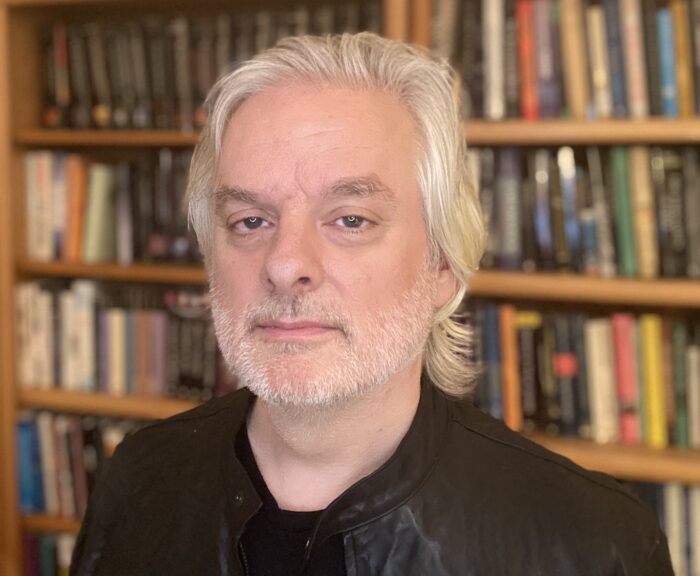
David Chalmers
Professor of Philosophy and Neural Science, New York University
Co-Director, Center for Mind, Brain, & Consciousness, New York University
Papers / Presentations
Participant In These Roundtable Discussions
Sat
Mar 7th
2015
Mar 7th
2015
Watch
Apprehending Consciousness
Is science nearing an answer to the question of how and why consciousness and self-consciousness come about? In attempting to resolve the mystery of sentience, what roles do physics, psychology, psychoanalysis, and neuroscience play? How do various philosophical and religious traditions contribute to our inquiries into this obvious and everyday universal experience?
Sat
Oct 15th
2022
Oct 15th
2022
Watch
Coding and the New Human Phenotype
From the level of DNA to that of phenotype, life may be viewed as an articulation of code. Within such a model, phenotypes are a kind of abstraction of the DNA code. Starting with the genome, the DNA winds its way through RNA, proteins, and cellular process outward into the world beyond, and in the... read more! »
Sun
Oct 16th
2022
Oct 16th
2022
Watch
Coding and the New Human Phenotype: Is the Universe a Metaverse?
Our panel will discuss the suggestion that we have been living in a sort of metaverse all along. This claim starts with the notion that the Universe evolves as one giant algorithmic computation, and that information is the basic substance. A variation on this line of thought asks the question: could we be living in... read more! »